Rubbing Quartz Crystals Makes Real Light: The Shaman Story Is Shakier
October 2026
Original post: @DrGregLittle2 on X, 17 Oct 2026. If the embed above doesn’t load, everything it showed is written out below.
Gregory L. Little, Ed.D., a psychologist and author of several books on Native American archaeology (including a reference encyclopedia of Indian mounds and earthworks), posted a short video: rubbing two white quartz cobbles together in a darkened room, then doing the same thing underwater. Both times, the crystals glow. He says Native American shamans used this trick to make light, and points to “triboluminescence” and “piezoelectricity” for the explanation.
What the video actually shows
Rather than take the caption’s word for it, the actual video is worth pulling apart frame by frame.
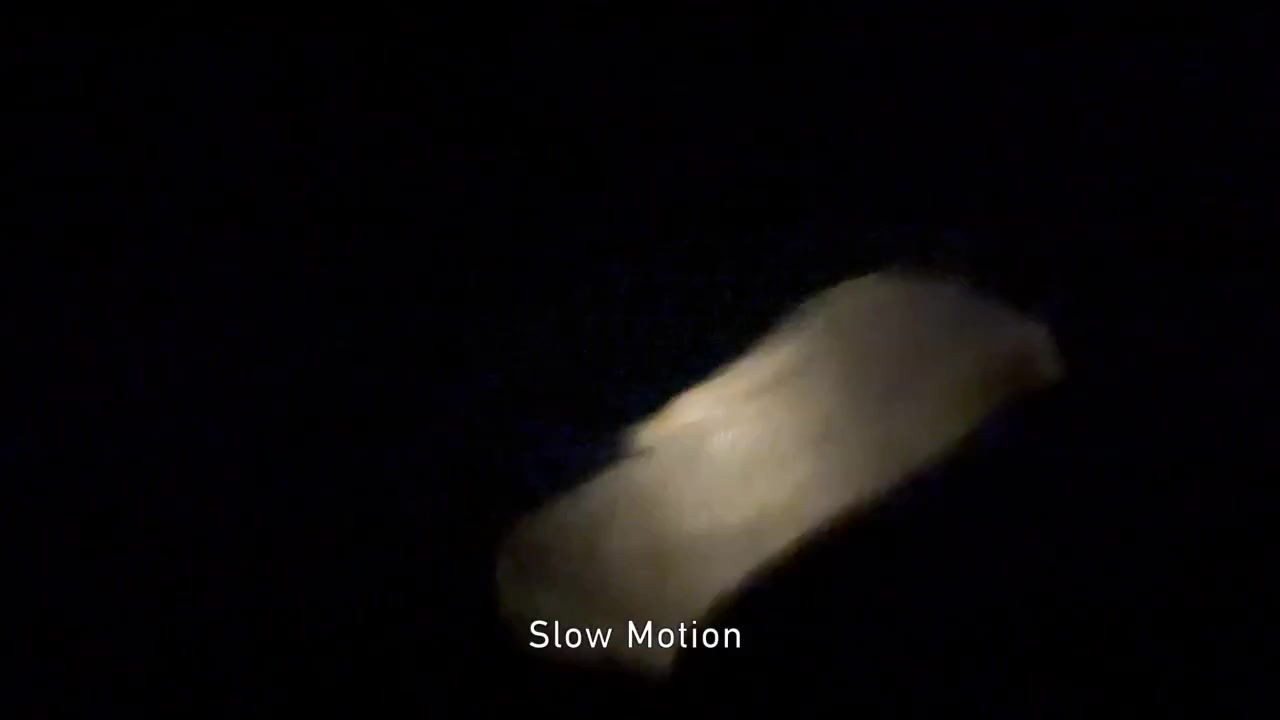
A clear, bright flash where the two crystals meet, in air. Video still from @DrGregLittle2.
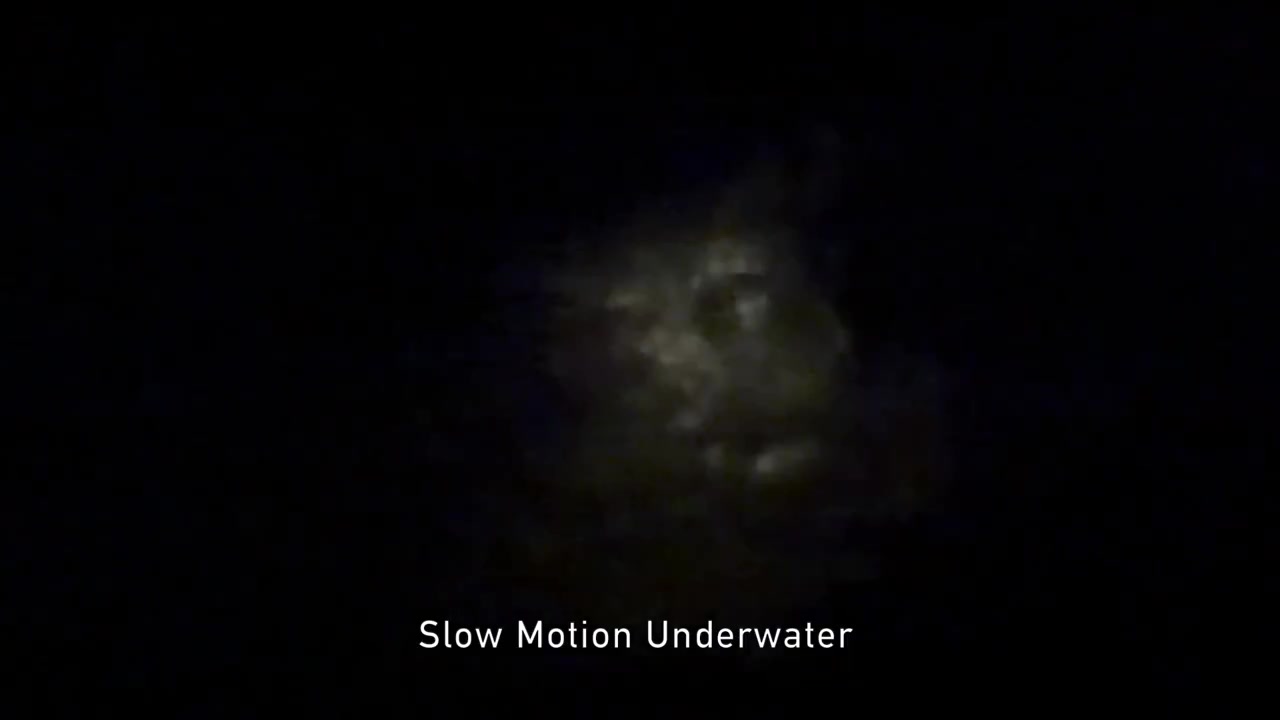
The harder case: the same two crystals, rubbed together underwater, with a dimmer, more diffuse bright patch visible on camera. Whether that’s the crystals physically glowing or an artifact of water and low light is addressed below. Video still from @DrGregLittle2.
Both frames contain real, bright pixel values at the contact point, not a caption describing something the footage doesn’t show. That’s worth checking before trusting any caption, but it only establishes the file isn’t a bare text claim; it doesn’t by itself rule out staging, an added light source, or camera processing. The in-air flash matches triboluminescence as independently documented for centuries in lab settings (below), so it carries that backing regardless of this one clip’s own limits. The underwater frame has no such independent backing and is the harder case: a phone recording alone can’t separate a real, physical glow at the crystal from scatter through murky water, a phone’s auto-exposure or computational night-mode processing brightening a dark scene, or compression. Treat the underwater footage as “something bright happened on camera,” not as a settled physical measurement. Whether the light-producing mechanism is even the same underwater as in air is a separate, harder question, addressed below.
The real physics: two related, genuinely old effects
Quartz has been known to spark when struck or rubbed for centuries. Francis Bacon recorded the same kind of flash from scraping sugar in the dark in the early 1600s, though sources disagree on exactly which of his books it first appeared in, so this piece doesn’t pin an exact year it can’t confirm. The general name for light produced by mechanical action on a crystal is mechanoluminescence; two related but distinct mechanisms sit underneath it. Rubbing two cobbles together, as shown here, is the regime usually classed as the first one, though this video alone has no way to measure how much of each is actually happening:
- Triboluminescence is light from breaking bonds: fracture or abrasion separates electric charge, and the resulting field can drive dielectric breakdown in a nearby gas gap, with the visible light often coming from the excited gas itself rather than the crystal, the same basic physics as a tiny spark of lightning.
- Piezoluminescence is light from deforming an intact, unbroken crystal through the piezoelectric effect alone, no fracture required. This project’s own Diamond Electricity article covers the opposite case: bulk diamond’s highly symmetric lattice can’t be piezoelectric at all. Quartz’s lattice has no such symmetry, and the Curie brothers identified it as piezoelectric back in 1880, so a real piezoelectric charge is expected to build up inside these crystals under load. Whether that specific channel, separate from fracture, contributes any of the visible light in this video is not shown by anything cited here; rubbing and grinding is not the fracture-free deformation test that would isolate it.
Even after centuries of study, there is no single theory that explains every detail of how that charge becomes visible light. The core picture, fracture or strain separating charge that then discharges through a nearby gas, is standard and widely accepted for many crystals in air. What’s still actively researched is the finer detail: which defects or surface states do the emitting, and what happens when the usual air gap isn’t available, which is exactly the underwater case below.
The harder case: light underwater
The in-air flash fits the classic picture cleanly: rub the crystals, separate charge, spark across a thin air gap where two freshly-separated surfaces meet. Submerged in bulk water, that classic gas-discharge spark is generally suppressed or altered; water doesn’t break down into a visible flash the same way a thin air gap does.
That doesn’t mean light-from-crystals underwater is unheard of. Nathan Eddingsaas and Kenneth Suslick at the University of Illinois showed in 2006 that crystal slurries agitated by ultrasound in a liquid produce real, measurable flashes of light (“Light from sonication of crystal slurries,” Nature 444, 163). That’s evidence mechanoluminescence isn’t strictly tied to a dry, open-air environment in general. That said, acoustic cavitation in a slurry is a genuinely different regime from two cobbles rubbed by hand, so it’s evidence that liquid-phase light emission from crystals can happen, not a demonstrated mechanical match for this specific video. Likely culprits worth naming rather than resolving: microscopic gas bubbles or trapped air films at the contact point (water rarely excludes air as completely as it looks like it does), or a genuinely different, non-air-discharge emission pathway. Which one is actually responsible here hasn’t been nailed down by anyone this piece could find, and that’s stated as an open question rather than papered over with a confident-sounding guess.
Did shamans actually do this?
Little’s caption says shamans used this to “make light.” The real archaeology behind that claim is real, but it’s narrower, more contested, and less firmly sourced here than the caption suggests. Worth stating plainly rather than dressed up with borrowed precision.
Secondary accounts report that quartz was a favored hammerstone for pecking Native American rock engravings across the Mojave Desert and Great Basin, and that archaeologist David Whitley, in his book The Art of the Shaman (2000), goes further and argues some groups chose it partly for its ritual association with light and supernatural power, not only as a tool. This entry has not read Whitley’s excavation reports or his book directly, so treat the specifics of that argument as reported, not independently checked; what’s solid is that a real, named archaeologist made a real, published argument along these lines, not that Little invented it.
It’s also genuinely contested, and this entry can only report, not settle, the dispute. Three things to hold onto plainly:
- The utility explanation fully accounts for the physical evidence without needing a ritual motive at all. Quartz is hard, fractures predictably, and was locally available, which makes it a good pecking stone regardless of why anyone chose it. Nothing about finding quartz residue on a petroglyph, by itself, shows anyone cared that the stone also glows.
- Whitley’s own shamanic/neuropsychological framework for reading rock art is itself a disputed position in archaeology, not a settled consensus method, and critics have argued it over-applies ethnographic analogy. The main supporting voice this entry found for Whitley’s reading, David Lewis-Williams, works from inside that same framework, so it isn’t independent corroboration.
- This entry has not read Whitley’s or Lewis-Williams’s books directly. Everything above about their specific claims, including the “supernatural power” framing, comes through secondary reporting, not primary text, and a specific statistic once drafted into this piece was dropped for exactly that reason. One thing this entry did check directly, by downloading and reading the actual scanned PDF rather than a summary of it: a 2001 academic review of Whitley’s own book (Steven Simms, Journal of California and Great Basin Anthropology; the scan didn’t preserve a clean page number) notes that the book itself is “heavily footnoted” but mostly cites sources “in their entirety, not the specific page citations permitting a rigorous evaluation of the asserted evidence.” A book criticized for exactly that gap by its own contemporary reviewer is a poor candidate for confident secondhand page citations, which is why this entry doesn’t offer any.
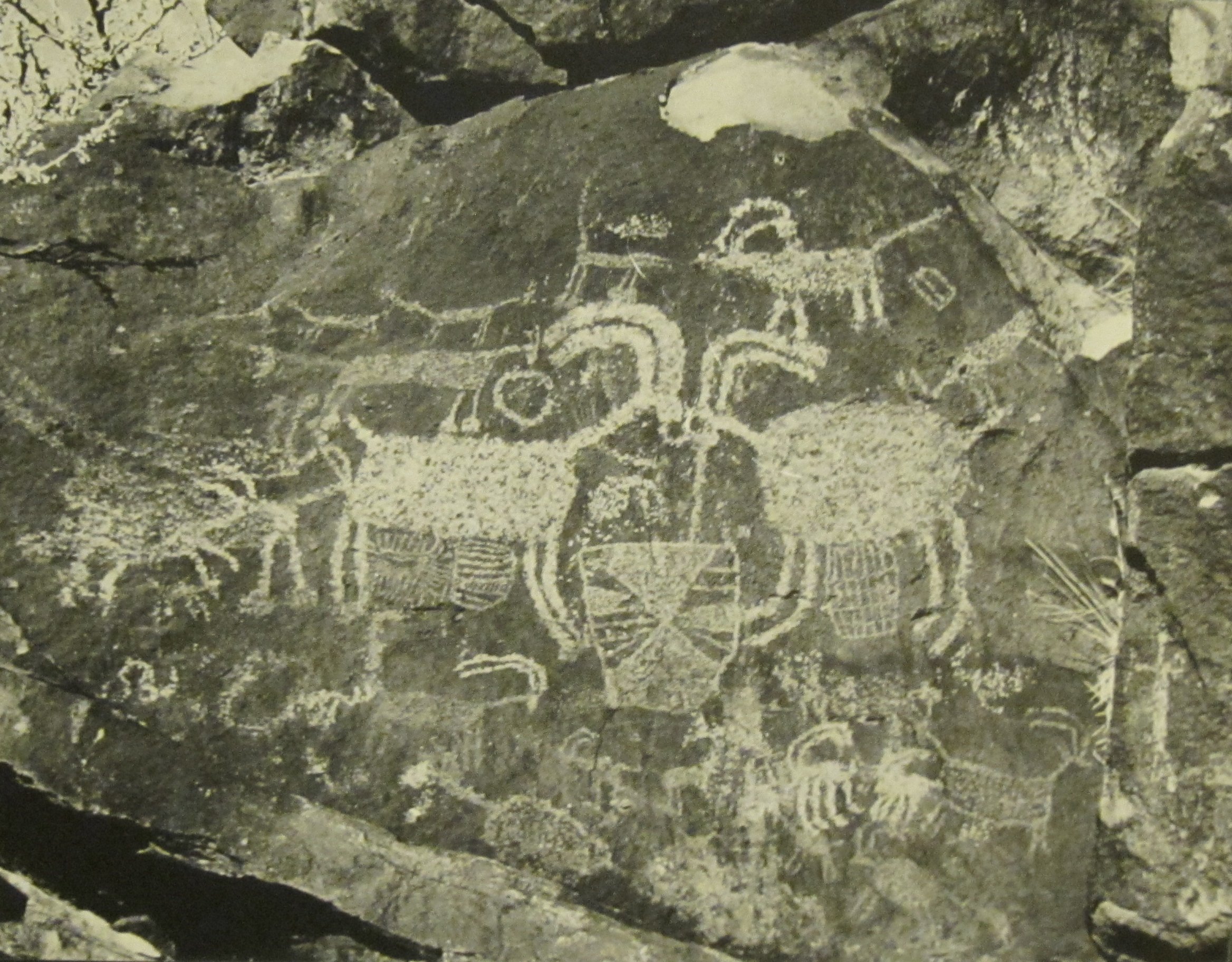
Rock art in the Coso Rock Art District, Mojave Desert, the same region covered by the secondary accounts of Whitley’s quartz-hammerstone work cited above. Photo: US Navy, public domain.
So: a real archaeologist has made a real, published argument connecting quartz’s glow to ritual practice, independent of Little’s own separate work on Atlantis and the Edgar Cayce organization, which this entry takes no position on. It is a published argument inside one contested research tradition, not an established fact, and the physical evidence alone doesn’t distinguish it from quartz simply being a good rock to hit other rocks with.
Catalog status
Triboluminescence and piezoelectricity, as general physical effects, are Proven Systems: documented for centuries and independently replicated many times over, in controlled lab settings. This specific video is a different kind of thing. The in-air clip is a real, uncontrolled amateur demonstration consistent with those known effects. The underwater clip is weaker evidence still: real bright pixels, with no spectra, no exposure data, and no way to exclude trapped air at the contact point, so this entry treats it as an open question rather than a confirmed instance of anything. Worth recording either way, as a striking phone-video moment; not worth citing as proof of either the physics or the archaeology. The archaeological claim about shamanic use isn’t a physics claim at all. It’s a published argument inside one contested research tradition in rock-art archaeology, resting on excavated evidence that also admits a simpler, non-ritual explanation, and on sourcing this entry could only check secondhand.
Where this touches PBT
Nowhere. This is mineralogy, solid-state physics, and archaeology: crystal lattice symmetry, charge separation, and a debated reading of a documented human practice. Pressure-Based Theory makes no claim about any of it. Recorded because it’s a real, striking demonstration, cross-checked frame by frame against the actual video rather than the caption, and worth a durable home, exactly what this section of the site is for.
Sources, consulted directly: @DrGregLittle2 on X, 17 Oct 2026, video downloaded and reviewed frame by frame. Gregory L. Little’s background: standard author bio, Edgar Cayce’s A.R.E. speaker page. Mechanoluminescence/triboluminescence general physics: “Triboluminescence: Recalling Interest and New Aspects,” Chem (Cell Press), 2018, a peer-reviewed review, with Wikipedia’s “Triboluminescence” and “Mechanoluminescence” entries for orientation only. Underwater/liquid-phase mechanoluminescence: Eddingsaas & Suslick, “Light from sonication of crystal slurries,” Nature 444, 163 (2006). Quartz piezoelectricity history: standard physics history (Curie brothers, 1880). Steven Simms’s 2001 review of The Art of the Shaman, Journal of California and Great Basin Anthropology: the actual scanned PDF, pulled and read directly, not a summary.
Reported via secondary sources only, not read directly, and flagged as such in the body text above: David Whitley, The Art of the Shaman (2000); David Lewis-Williams, The Mind in the Cave (2002). A third claim, that archaeologist Florence Hawley Ellis excavated and named a pair of “lightning stones” in a kiva, turned up only through those two books’ own retellings, with no path to Ellis’s original report found; left out of the body above for that reason.
Image credits
- Video stills (in-air and underwater glow): from @DrGregLittle2’s posted video, used to verify the claim directly rather than taking the caption’s word for it.
- Coso petroglyphs: Wikimedia Commons, public domain (US Navy).

Revision History
This is a standing work, revised as the underlying understanding improves rather than fixed at publication. Every substantive change is logged here, most recent first.
| Rev | Date | Change | By |
|---|---|---|---|
| 1 | 2026-10-17 | Original publication. | Matthew Foutch / Claude |